
About Gryffi
I built the tool I needed myself
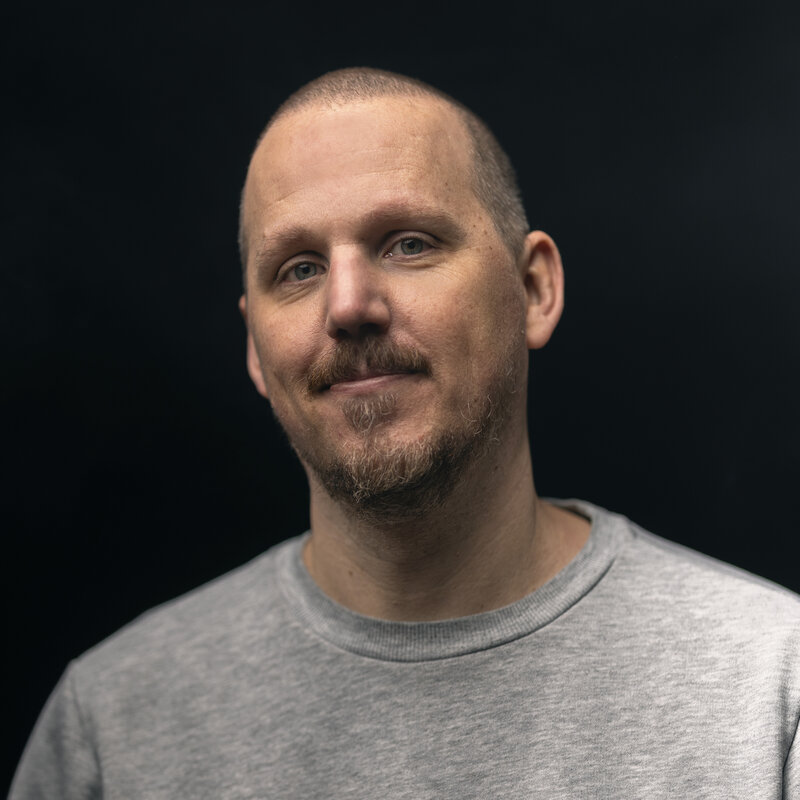
Hi, I'm Erik Griffioen. I have ADHD and dyslexia, and I've worked in IT since 1997. Gryffi exists because in all those years, nobody ever handed me a manual I actually finished. This page explains why that matters, and what I'm doing about it.
The short version
- Company
- Gryffi, a sole proprietorship of Erik Griffioen, Loosdrecht, the Netherlands (KvK 80453783)
- Contact
- info@gryffi.com, answered by me
- In IT since
- 1997
- Previously
- Linux administrator in government (municipality of Woerden), 20 years
- Also
- Music producer (Lloyd Stellar), label owner (LDI Records), mastering engineer
- Brain
- ADHD and dyslexia, the reason Gryffi exists
The wall of text
Working in IT means reading. Handbooks, manuals, procedures, security policies, vendor documentation: the information you need to do your job properly comes as a wall of text. You are supposed to read it all. I never could.
Reading long text with dyslexia costs me far more energy than it costs most people. And with ADHD, my attention has left the building somewhere around page three. For years I thought that was my failure.
It took me embarrassingly long to see it differently: the information was fine, the format was broken. Not just for me, but for the roughly one in five people whose brains work differently (I wrote four articles about what the research says about ADHD at work), and honestly for most of the people around me too. They just hid it better.
Twenty years of keeping servers alive
I spent most of my career as a Linux administrator, twenty years of it in government, at the municipality of Woerden in the Netherlands. Government work means documentation: procedures, policies, handover documents. I saw first-hand how much knowledge gets written down and never read. When an experienced colleague left, their knowledge left with them, no matter how many pages they wrote before their goodbye party.
That period taught me two things. One: writing things down is not the same as sharing knowledge. Two: I could build systems that solve boring problems reliably. Both turned out to be useful.
I like making things
Outside of IT, I produce electro music as Lloyd Stellar and Warriors of Kagh, I run a small vinyl label called LDI Records, and I master records for other artists. That is not a side note. Making things is how my brain works: pick up something new, go all in, learn it fast, connect it to everything else I know.
For a long time I was told this was a lack of focus. I now think it is the most ADHD thing about me, and the reason Gryffi exists. Building an onboarding platform takes exactly that kind of jumping between fields: learning science, design, servers, AI, writing. A specialist would have done it neater. A generalist actually did it.
What Gryffi is really about
Gryffi turns manuals, policies and training material into short interactive journeys: one small step at a time, switching between images, video, quizzes, 360° tours and an AI guide you can just ask questions. Built on what we know about attention and memory.
I built it first for people like me, because we hit the wall of text first and hardest. Designing for brains that struggle has a side effect: everyone else benefits too. Shorter steps, clearer structure and less reading make training better for your whole team, not just the neurodivergent fifth of it.
Gryffi is a small, independent company. It is hosted entirely in the EU, and I personally answer the support email. If you write to me, you get me.
What happens if Gryffi stops or is sold
A fair question to ask a company of one person, so here is the answer. Gryffi is hosted entirely in the EU, with backups, and you can cancel month by month.
If I ever sell Gryffi, customers and their data go with it, under the same terms. If I stop, every customer first gets an export of their journeys and data. After that, the data is deleted from the Gryffi servers. You will not be left with a dead login and no way to get your information out.
How your data is protected today is described on the security page and in the data processing agreement.
Rather watch than read?
Years ago I asked a question on a technical forum. The answer came back in four letters: RTFM. Read the freaking manual. For me, the manual was the problem. In this short video I tell that story, and explain why text-only knowledge sharing fails so many people.
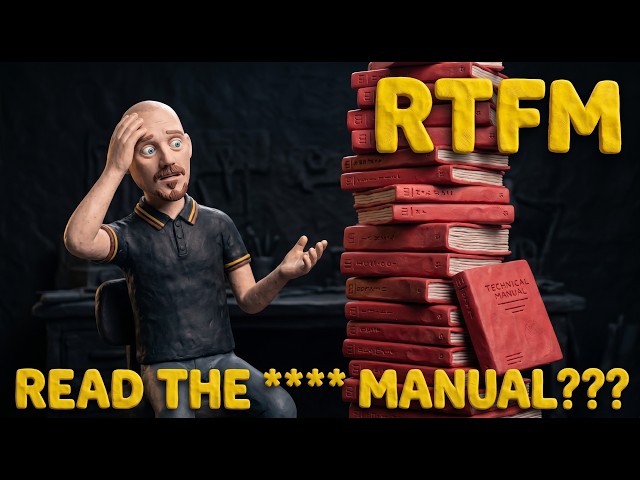
The video looks like clay animation, but it was made with AI. Standing in front of a camera is not my thing. Making things is. (2 minutes 21 seconds)
Things I've written
I write about neurodiversity, attention and knowledge sharing at work, mostly for Frankwatching (in Dutch).
Frankwatching, June 2026
AI makes the ADHD brain more valuable than ever
Why the working world is finally shifting in favour of people who think in connections instead of straight lines.
Frankwatching, May 2026
Knowledge sharing at work needs to change
The average attention span on a screen is 47 seconds. Our manuals still assume it is 45 pages.
Find me elsewhere
See if it works for your brain
Upload one of your own documents and watch it become an interactive journey. Free, no account needed.